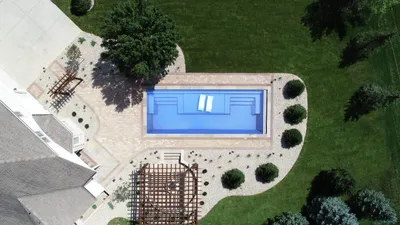
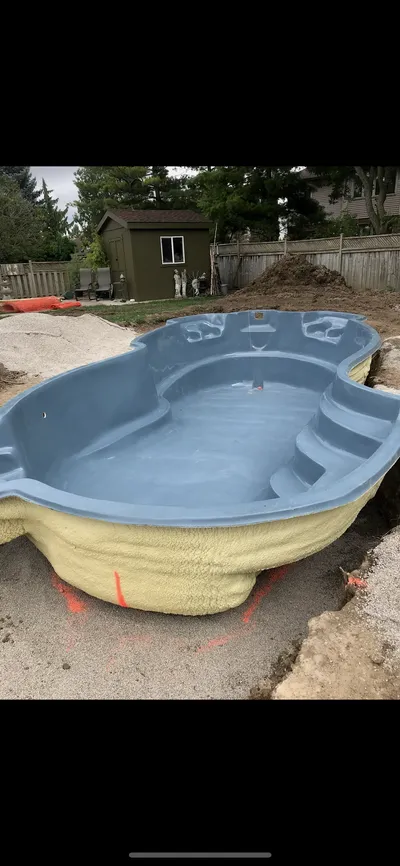
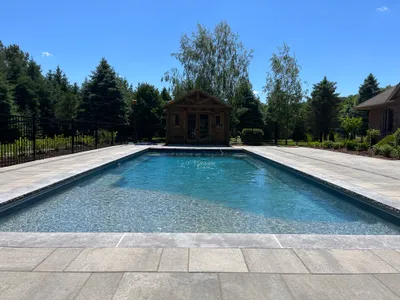
There are only three types of inground pools: fiberglass, concrete (sometimes called gunite or shotcrete), and vinyl liner. Every inground pool you have ever seen falls into one of these categories.
Each has real strengths. Each has real weaknesses. And most of the information you find online is written by someone who sells one type and has a reason to make the others look bad.
This article compares all three honestly, covering cost, installation time, maintenance, durability, design options, and how each handles Ontario's freeze-thaw climate.
A note about our bias
We install fiberglass pools, so we have a bias. We chose fiberglass for good reasons, but those reasons do not make concrete and vinyl liner pools bad. They just make fiberglass the right fit for most of the homeowners we work with.
We will point out where concrete or vinyl liner pools genuinely have an advantage over fiberglass. If one of those types is the better fit for your situation, we would rather you know that upfront than find out after the fact.
How do the three pool types compare on cost?
Cost is usually the first question, so here is a straightforward comparison. These are total project prices for Ontario in 2026, including excavation, equipment, patio, and fencing. For a detailed breakdown of what goes into a fiberglass pool price, see our complete cost guide for fiberglass pools in Ontario.
| Fiberglass | Concrete | Vinyl Liner | |
|---|---|---|---|
| Total project cost (CAD) | $75,000 – $130,000 | $100,000 – $180,000+ | $50,000 – $80,000 |
| Pool shell/structure | $25,000 – $45,000 | $40,000 – $80,000 | $15,000 – $25,000 |
| Price trend | Rising 3–5% per year | Rising 5–8% per year | Rising 3–5% per year |
Vinyl liner pools win on upfront cost. Concrete pools are the most expensive upfront. Fiberglass sits in the middle.
But upfront cost only tells part of the story. The real question is what each pool costs to own over 10, 20, or 25 years. We cover that in the lifetime cost section below.
How long does each pool type take to install?
Installation time matters more in Ontario than in warmer climates. The building season here runs roughly April through October. If your pool takes too long to install, you could lose most or all of your first summer.
| Pool Type | Installation Time | What Happens |
|---|---|---|
| Fiberglass | 2 – 4 weeks | The shell arrives pre-built. It gets lowered into the hole by crane, levelled, backfilled, plumbed, and connected to equipment. |
| Vinyl liner | 4 – 8 weeks | The hole is dug, walls are built on-site (steel or polymer panels), plumbing is roughed in, and the vinyl liner is custom-fitted over the walls and floor. |
| Concrete | 3 – 6 months | The hole is dug, rebar is formed, concrete is sprayed (shotcrete or gunite), it cures for weeks, then the surface is plastered and tiled. Multiple trades cycle through. |
Fiberglass is the fastest because the pool shell is manufactured in a factory, not built on-site. The hole gets dug, the shell gets set, and within a few weeks you are swimming.
Concrete pools take the longest because they are built entirely on-site, step by step. Weather delays, subcontractor scheduling, and curing time all add up. A concrete pool started in May might not be ready until August or September.
Which pool type is easiest to maintain?
Maintenance is where the three pool types differ the most over time. The surface material determines how much work you need to do and how much you spend on chemicals each year.
| Fiberglass | Concrete | Vinyl Liner | |
|---|---|---|---|
| Surface | Smooth gel coat | Rough plaster/pebble | Smooth vinyl sheet |
| Algae resistance | High (smooth, non-porous) | Low (rough, porous) | Moderate (smooth but can stain) |
| Chemical use | Lower | Higher (30–40% more) | Moderate |
| Scrubbing needed | Minimal | Regular brushing required | Minimal (but careful with brushes) |
| Annual cost (CAD) | $1,000 – $3,000 | $2,500 – $5,000+ | $1,200 – $3,000 |
Fiberglass pools have the lowest maintenance burden. The gel coat surface is smooth and non-porous, so algae has a hard time getting a foothold. When algae does appear, it wipes off easily instead of embedding itself into the surface.
Concrete pool surfaces are rough and porous. Algae works its way into the tiny pores and requires regular brushing to keep under control. Concrete pools also tend to affect water chemistry more than fiberglass, so you use more chemicals to keep the water balanced.
Vinyl liner pools are relatively easy to maintain day-to-day, but the liner itself is the weak point. You need to be careful with sharp objects, aggressive brushes, and dogs with sharp nails. A torn liner means a repair or replacement.
How long does each pool type last?
All three pool types can last a long time, but "lasting" means different things for each one. The question is not just whether the pool survives, but what it costs to keep it in good condition over the decades.
| Fiberglass | Concrete | Vinyl Liner | |
|---|---|---|---|
| Shell/structure life | 25 – 30+ years | 50+ years | Structure: 25+ years |
| Surface life | 25 – 30+ years (gel coat) | 10 – 15 years (plaster) | 7 – 12 years (liner) |
| Resurfacing cost | Not typically needed | $15,000 – $30,000 | $5,000 – $9,000 (liner replacement) |
Concrete pools have the longest structural life. The concrete shell itself can last 50 years or more. But the interior surface (plaster, pebble, or quartz finish) wears out every 10 to 15 years and needs to be resurfaced. That is a major expense each time. For more details on how fiberglass holds up, see our article on how long fiberglass pools actually last.
Fiberglass pool shells typically last 25 to 30 years or longer. The gel coat surface does not need resurfacing the way concrete does. Some fiberglass pools from the 1990s are still in use today with their original gel coat. That said, fiberglass pools can develop issues like spider cracks and colour fading over time.
Vinyl liner pools have a durable underlying structure, but the liner itself is the consumable part. Most liners last 7 to 12 years before they need replacement. Over 25 years, you are likely replacing the liner two or three times.
Which pool type offers the most design flexibility?
This is where concrete has a clear advantage.
- Concrete: Any shape, any size, any depth. Concrete pools are built from scratch, so the design options are virtually unlimited. Want a 20-foot-wide pool with a 10-foot deep end and a built-in grotto? Concrete is the only way to do it.
- Fiberglass: You choose from a set of pre-designed shapes and sizes made by the manufacturer. Most manufacturers offer 30 to 80 models. Widths top out around 16 feet because the shell has to fit on a truck for transport. You can choose the colour of the gel coat, but you cannot modify the shape.
- Vinyl liner: More flexible than fiberglass. The walls are built on-site using panels, so shapes can vary more. Custom liner prints and patterns are available. But the liner seams and step inserts limit how complex the design can get.
If you want a standard rectangular, freeform, or Roman-end pool in a size that fits a typical backyard, fiberglass and vinyl liner both offer plenty of options. If you need something truly custom or very large, concrete is the way to go.
Which pool type handles Ontario winters best?
Ontario's freeze-thaw cycle is hard on pools. The ground freezes and thaws multiple times between November and April. Water expands when it freezes. These forces put stress on any pool structure.
- Fiberglass: Fiberglass is flexible. The shell can flex slightly with the ground movement caused by freeze-thaw cycles without cracking. This is one of the main reasons fiberglass pools do well in Ontario. However, if water gets behind the shell (due to poor backfill or drainage), the shell can shift or even float upward. Proper installation prevents this.
- Concrete: Concrete is rigid. It does not flex. Freeze-thaw cycles can cause cracking in the concrete shell over time, especially around the waterline tile and coping. These cracks can be repaired, but they tend to come back. Concrete pools in Ontario generally need more cold-climate maintenance than fiberglass.
- Vinyl liner: The vinyl itself handles cold well. The bigger concern is the wall panels underneath. Steel panels can rust over time if moisture gets in. Polymer panels hold up better in wet climates. The liner can also become brittle in very cold temperatures, so it should not be disturbed during winter.
All three pool types work in Ontario when they are installed properly. But fiberglass has a natural advantage in freeze-thaw climates because of its flexibility.
Does pool type affect home resale value?
A pool adds value to a home in Ontario, but the type of pool matters less than you might think. What matters more is the overall condition and presentation of the backyard.
A well-maintained fiberglass pool with a nice patio will add more value than a neglected concrete pool with cracked coping and stained plaster. A vinyl liner pool with a fresh liner and good landscaping will show better than a fiberglass pool with faded gel coat and weeds growing through the patio.
That said, concrete pools carry a reputation for being "higher end" in some buyers' minds. Fiberglass pools are increasingly well-known and well-regarded. Vinyl liner pools are sometimes seen as the budget option, which can affect perception.
For more on whether a fiberglass pool adds enough value to justify the price, see our article on whether fiberglass pools are worth it.
What is the true lifetime cost of each pool type?
The upfront price is only one part of the cost. Over 25 years, maintenance, resurfacing, liner replacements, and chemical costs add up significantly.
| Cost over 25 years | Fiberglass | Concrete | Vinyl Liner |
|---|---|---|---|
| Upfront cost | $75,000 – $130,000 | $100,000 – $180,000 | $50,000 – $80,000 |
| Annual maintenance (x25) | $25,000 – $75,000 | $62,500 – $125,000 | $30,000 – $75,000 |
| Resurfacing / liner replacements | $0 | $15,000 – $30,000 (once or twice) | $10,000 – $27,000 (2–3 liners) |
| Estimated 25-year total | $100,000 – $205,000 | $177,500 – $335,000 | $90,000 – $182,000 |
Vinyl liner pools have the lowest upfront cost and can have the lowest 25-year cost if you are diligent about maintenance and the liners last toward the longer end. But if liners need early replacement (due to dogs, sharp objects, or chemical damage), the costs climb.
Fiberglass pools tend to have the most predictable long-term cost. No resurfacing, lower chemical use, and minimal maintenance. What you pay upfront is close to what the pool costs to own over time.
Concrete pools are the most expensive both upfront and over time. The combination of higher chemical costs, regular resurfacing, and more intensive maintenance adds up.
How do you decide which pool type is right for you?
Here is a straightforward way to think about it:
Fiberglass is a good fit if:
- You want a pool that is relatively low maintenance
- You want to be swimming in 2 to 4 weeks, not 3 to 6 months
- You are happy choosing from a range of pre-designed shapes and sizes
- You want a smooth surface that resists algae
- Your pool does not need to be wider than about 16 feet
Concrete is a good fit if:
- You need a completely custom shape or size
- You want a pool wider than 16 feet or deeper than 8 feet
- You want specific finish options like glass tile, pebble, or quartz
- You are willing to spend more upfront and on ongoing maintenance
- You are comfortable with a 3-to-6-month build timeline
Vinyl liner is a good fit if:
- Upfront budget is your primary concern
- You want some shape flexibility without the concrete price tag
- You are comfortable replacing the liner every 7 to 12 years
- You do not have dogs that will swim in the pool regularly
- You want a smooth surface with a variety of printed patterns
There is no single "best" pool type. There is only the best pool type for your situation, your budget, and your backyard.
Frequently Asked Questions
Which pool type is cheapest to install in Ontario?
Vinyl liner pools have the lowest upfront cost in Ontario, typically $50,000 to $80,000 CAD fully installed. Fiberglass pools run $75,000 to $130,000. Concrete pools are the most expensive at $100,000 to $180,000 or more. However, vinyl liners need replacement every 7 to 12 years, which adds significant cost over time.
Which pool type lasts the longest?
Concrete pools can last 50 years or more with proper maintenance, but they require resurfacing every 10 to 15 years. Fiberglass pool shells typically last 25 to 30 years or longer without needing resurfacing. Vinyl liner pools have a durable structure, but the liner itself needs replacement every 7 to 12 years.
Which pool type requires the least maintenance?
Fiberglass pools require the least maintenance. The smooth gel coat surface resists algae growth, which means fewer chemicals and less scrubbing. Annual maintenance typically runs $1,000 to $3,000 CAD. Concrete pools cost $2,500 to $5,000 or more per year because the rough surface encourages algae and requires more chemicals.
Can you get a custom-shaped fiberglass pool?
No. Fiberglass pools are manufactured in moulds at a factory, so you choose from a set of pre-designed shapes and sizes. Most manufacturers offer 30 to 80 models in various shapes, including rectangles, freeforms, and Roman ends. If you need a truly custom shape or a pool wider than about 16 feet, concrete is the only option.
How long does it take to install each pool type in Ontario?
Fiberglass pools take 2 to 4 weeks from excavation to first swim. Vinyl liner pools take 4 to 8 weeks. Concrete pools take 3 to 6 months. Ontario's shorter building season (roughly April to October) makes installation time especially relevant because a concrete pool started in June may not be finished until fall.