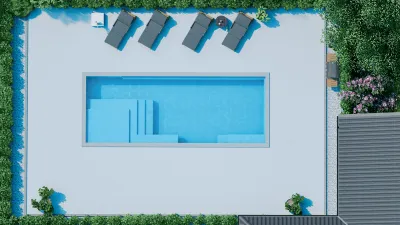
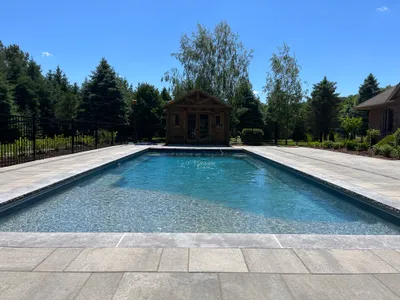
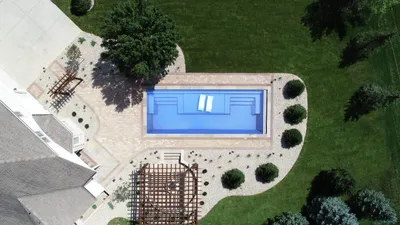
We install fiberglass pools. We believe they are the best option for most homeowners in Ontario. But they are not perfect, and pretending otherwise would not help you make a good decision.
Fiberglass pools have real problems that can happen. Some are cosmetic. Some are structural. Some are caused by the product itself, and some are caused by the pool company that installed it.
This article covers the seven most common problems with fiberglass pools, explains what causes each one, and tells you how to avoid them. If you are comparing pool types, our fiberglass vs concrete vs vinyl comparison covers how each type stacks up on durability and maintenance.
1. Spider cracks in the gel coat
What it looks like
Spider cracks are small, hairline cracks in the gel coat surface. They typically appear as short lines (1 to 3 inches long) branching outward from a central point, which is where the name comes from. They are usually most visible on the steps, bench seats, or flat surfaces of the pool.
What causes it
Spider cracks happen when the gel coat experiences localized stress. The gel coat is the coloured outer layer of a fiberglass pool. It is hard but somewhat brittle. Stress can come from several sources:
- Flexing during transport. The pool shell is hauled on a truck over hundreds of kilometres. Road vibration and movement can create stress points, especially on flat surfaces like steps and tanning ledges.
- Impact during installation. If the shell is bumped by the crane or contacts the excavation walls during placement, the gel coat can crack at the impact point.
- Uneven support underneath. If the gravel base is not perfectly level and compacted, certain areas of the pool bear more weight than others. Over time, that uneven load can cause spider cracks.
- Gel coat thickness variation. If the manufacturer applies the gel coat unevenly (too thick in some areas), those areas are more prone to cracking.
How serious is it
Spider cracks are cosmetic. They do not go through the structural fibreglass layers underneath the gel coat, and they do not cause leaks. They look worse than they are.
How to avoid it
Choose a pool from a manufacturer with quality gel coat application standards. Make sure your installer uses a properly levelled and compacted gravel base. If spider cracks appear, a gel coat specialist can repair them for $200 to $500 per area.
2. Bulging or buckling walls
What it looks like
The pool walls flex inward, creating a visible bulge. In severe cases, the wall can look like it is being pushed in from outside. You might notice the waterline is uneven, or the coping along the top edge no longer sits flush.
What causes it
Bulging is almost always an installation problem, not a product problem. It happens when hydrostatic pressure (groundwater pushing against the outside of the pool) exceeds the support provided by the backfill material.
The most common causes:
- Wrong backfill material. If the installer uses dirt, sand, or mixed fill instead of clean 3/4-inch crushed stone, the material does not drain properly. Water builds up behind the walls and pushes inward.
- Backfill not compacted properly. Even the right material needs to be placed in lifts (layers) and compacted as the pool fills with water simultaneously. If the backfill is dumped in all at once, voids form and the support is uneven.
- High water table. In areas with a high water table (common in parts of London and Southwestern Ontario), groundwater pressure is naturally higher. This makes proper backfill and drainage even more critical.
How serious is it
Bulging is a serious problem. If caught early, the backfill can sometimes be corrected. In severe cases, the pool may need to be removed and reinstalled. This is one of the most expensive problems to fix, often costing $10,000 to $30,000 or more.
How to avoid it
This is why choosing the right installer matters more than choosing the right pool shell. Ask your pool company what backfill material they use, how they compact it, and whether they fill the pool with water as they backfill. The correct answer is clean crushed stone, placed in 12-inch lifts, with the pool filling simultaneously.
3. Colour fading over time
What it looks like
The pool colour gradually becomes lighter or duller over the years. A pool that started as a deep blue might look more grey-blue after 10 to 15 years. Fading is usually most noticeable at the waterline and on the steps where sunlight hits directly.
What causes it
Two main factors cause gel coat fading:
- UV exposure. Sunlight breaks down the colour pigments in the gel coat over time. This is the same process that fades car paint, outdoor furniture, and any other coloured surface exposed to the sun.
- Chemical contact. Pool chemicals, especially chlorine, are mildly corrosive to gel coat over many years. Consistently high chlorine levels, low pH, or improper chemical balance accelerates fading.
How serious is it
Fading is cosmetic. It does not affect the structural integrity or function of the pool. It happens gradually over many years, so you may not even notice it unless you compare photos from when the pool was new.
How to avoid it
Keep your water chemistry balanced. The single most effective thing you can do is maintain proper pH (7.2 to 7.6), alkalinity (80 to 120 ppm), and chlorine levels (1 to 3 ppm). Avoid shocking the pool with high concentrations of chlorine directly on the surface. Darker gel coat colours tend to show fading more than lighter colours.
4. Limited shapes and sizes
What the limitation is
Fiberglass pools are manufactured in moulds at a factory. You choose from the manufacturer's catalogue of shapes and sizes. You cannot modify the shape, depth, or dimensions of a given model.
The maximum width of a fiberglass pool is typically around 16 feet because the shell has to fit on a truck for highway transport. Lengths range from about 10 feet to 40 feet depending on the manufacturer.
How much of a limitation is it really
For most homeowners, this is not as big a limitation as it sounds. Manufacturers like Thursday Pools, Latham, and Leisure Pools offer 30 to 80 models each, covering rectangles, freeforms, Roman ends, L-shapes, and plunge pools. Most backyards in London and Southwestern Ontario work well with a pool in the 12 x 24 to 16 x 36 foot range.
Where it becomes a real limitation is if you need a pool wider than 16 feet, deeper than about 8 feet, or a shape that does not exist in any manufacturer's lineup. In those cases, concrete is the only option.
How to work with it
Start by figuring out what size and shape works for your yard, then check whether any manufacturer makes a pool that fits. Most of the time, the answer is yes. If the answer is no, a concrete pool may be the better path.
5. Shell flotation (water getting behind the pool)
What it looks like
The pool shell lifts out of the ground, sometimes by several inches. In extreme cases, the pool can rise a foot or more, cracking the patio and snapping the plumbing connections. This is the most dramatic thing that can go wrong with a fiberglass pool.
What causes it
A fiberglass pool shell is a large, hollow, watertight vessel. When filled with water, it weighs tens of thousands of pounds and stays firmly in place. But if the pool is drained (for maintenance, repairs, or winterization), the empty shell weighs very little.
If the water table is high enough, groundwater pushes up on the bottom of the empty shell with enough force to lift it out of the ground. This is called hydrostatic flotation. It follows the same physics as a boat floating in water.
How serious is it
Very serious. A floated pool is expensive to fix. The patio, plumbing, and coping usually need to be redone. In some cases, the shell needs to be removed and reset entirely. Repair costs can run $15,000 to $40,000 or more.
How to avoid it
- Never fully drain your fiberglass pool. If you need to lower the water level for a repair, keep as much water in the pool as possible.
- Install a hydrostatic relief valve. This is a valve in the pool floor that opens when groundwater pressure exceeds the weight of the pool, allowing water into the pool rather than letting the pool float. Most quality installers include this as standard.
- Proper backfill drainage. Clean crushed stone around the pool drains groundwater away from the shell, reducing hydrostatic pressure.
6. Surface staining
What it looks like
Discoloured spots, lines, or patches on the gel coat surface. Stains can be brown, green, blue-green, grey, or white depending on the cause. They are usually most visible on lighter-coloured pools.
What causes it
Several things can stain a fiberglass pool surface:
- Metals in the water. Iron, copper, and manganese are common in well water and even some municipal water supplies in Ontario. These metals can deposit on the gel coat and leave brown, green, or blue stains.
- Calcium deposits. Hard water (which is common in Southwestern Ontario) can leave white, chalky deposits on the pool surface, especially at the waterline.
- Organic stains. Leaves, berries, or other organic debris left sitting on the pool floor can leave brown or green stains.
- Algae. While fiberglass is more algae-resistant than concrete, algae can still form if the water chemistry is off for an extended period.
How serious is it
Most stains are cosmetic and removable. Metal stains can usually be treated with a sequestrant (a chemical that binds to the metal and keeps it in solution). Calcium deposits can be removed with a pumice stone or mild acid treatment. Organic stains often come out with a chlorine shock.
How to avoid it
Test your water regularly. Keep pH, alkalinity, and calcium hardness in the recommended ranges. If you fill your pool from a well, test the water for metals first and treat accordingly. Use a skimmer basket and clean out debris regularly.
7. Osmotic blistering
What it looks like
Small, raised blisters on the gel coat surface, usually 1 to 5 millimetres in diameter. When pierced, they may contain a brownish liquid with a vinegar-like smell. Blisters tend to appear in clusters on the walls or floor.
What causes it
Osmotic blistering happens when water passes through the gel coat and reacts with the fibreglass resin underneath. Small pockets of liquid form between the gel coat and the structural layers, pushing the gel coat outward into blisters.
This is more common in older fiberglass pools and in pools made with polyester resin. Modern pools made with vinyl ester resin are far more resistant to osmotic blistering because vinyl ester absorbs less water.
How serious is it
Osmotic blistering is uncommon in modern, quality fiberglass pools. When it does occur, it is mainly cosmetic in the early stages. If left untreated for years, it can progress and affect the structural layers. Repair involves grinding out the blisters and re-coating the affected area, which can cost $1,000 to $5,000 depending on how widespread it is.
How to avoid it
Choose a pool manufacturer that uses vinyl ester resin in their shells. Ask specifically about the resin type. Most reputable manufacturers have switched to vinyl ester for this reason. Keeping water chemistry balanced also helps, as aggressive water (low pH, low alkalinity) accelerates the osmotic process.
Which problems are installation issues vs. product issues?
This is the most useful way to think about fiberglass pool problems. The distinction matters because you can control who installs your pool, and a good installer eliminates most of the risk.
| Problem | Cause | Preventable by installer? |
|---|---|---|
| Spider cracks | Transport stress, uneven base, gel coat quality | Mostly yes |
| Bulging / buckling | Wrong backfill material or technique | Yes |
| Colour fading | UV exposure, chemical wear | No (but minimized by water chemistry) |
| Limited shapes | Manufacturing method | No (inherent to fiberglass) |
| Shell flotation | Draining without precautions, no relief valve | Yes |
| Surface staining | Water chemistry, metals, debris | Partially (homeowner maintenance matters) |
| Osmotic blistering | Resin type, water absorption | No (manufacturer quality issue) |
Three of the seven problems (bulging, flotation, and spider cracks) are directly tied to installation quality. One (blistering) is a manufacturer quality issue. The remaining three are either inherent to the product or related to ongoing maintenance.
This is why we tell homeowners to spend as much time choosing their installer as they do choosing their pool model. The shell quality matters, but the installation quality matters just as much. For a deeper look at how to evaluate what you are getting for your money, see our complete fiberglass pool cost breakdown.
What to ask your pool company before signing
Here are specific questions that help you separate experienced installers from ones that might cut corners:
- "What backfill material do you use?" The right answer is clean 3/4-inch crushed stone (also called clear stone or washed gravel). If they say "pit run," "fill," or "whatever is on-site," that is a concern.
- "Do you backfill and fill the pool with water at the same time?" The right answer is yes. Filling the pool with water as you backfill equalizes the pressure on both sides of the wall.
- "Do you install a hydrostatic relief valve?" The right answer is yes, especially in areas with a water table.
- "What resin does the manufacturer use in the shell?" The right answer is vinyl ester resin. Polyester resin is cheaper but more susceptible to osmotic blistering.
- "What is your warranty on the installation work?" Separate from the manufacturer's warranty on the shell. The installation warranty covers the excavation, backfill, plumbing, and electrical work.
- "Can I see pools you installed 5 or 10 years ago?" Any experienced company should be able to show you pools that have held up well over time. If they can only show you brand-new installs, ask why.
No pool type is problem-free. Concrete pools crack and need resurfacing. Vinyl liner pools need liner replacements every 7 to 12 years. Fiberglass pools have the problems listed above. The question is not whether problems can happen. The question is whether the problems are likely, how expensive they are to fix, and how much you can prevent them through good choices upfront. For a fair comparison of all three types, see our guide on whether fiberglass pools are worth it.
Frequently Asked Questions
Are spider cracks in a fiberglass pool a structural problem?
No. Spider cracks are cosmetic. They form in the gel coat (the coloured surface layer) and do not penetrate into the structural fibreglass underneath. They look like hairline fractures, usually less than 2 to 3 inches long, and do not cause leaks. They can be repaired by a gel coat specialist for $200 to $500 per area.
Can a fiberglass pool pop out of the ground?
Yes, but only if the pool is drained without proper precautions. A fiberglass pool shell is essentially a large hollow vessel. If groundwater pressure pushes up on an empty shell, it can lift out of the ground. This is called hydrostatic flotation. It is prevented by never fully draining the pool and by installing a hydrostatic relief valve in the floor.
How long does the gel coat on a fiberglass pool last?
A quality gel coat typically lasts 25 to 30 years or longer. It will fade somewhat over time due to UV exposure and chemical contact, but it does not need to be resurfaced the way concrete pool plaster does. Keeping water chemistry balanced is the most effective way to extend gel coat life.
What causes a fiberglass pool to bulge or buckle?
Bulging is almost always caused by improper backfill. If the wrong material is used to fill around the pool (such as dirt instead of clean crushed stone), or if the backfill is not compacted properly, hydrostatic pressure from groundwater can push against the pool walls and cause them to flex inward. Proper installation with clean 3/4-inch crushed stone prevents this.
Do fiberglass pools stain easily?
Fiberglass pools are less prone to staining than concrete pools because the gel coat surface is smooth and non-porous. However, they can develop stains from metals in the water (iron, copper, manganese), calcium deposits, or organic debris left sitting on the surface. Most stains can be removed with the right chemical treatment. Keeping water chemistry balanced prevents most staining.